
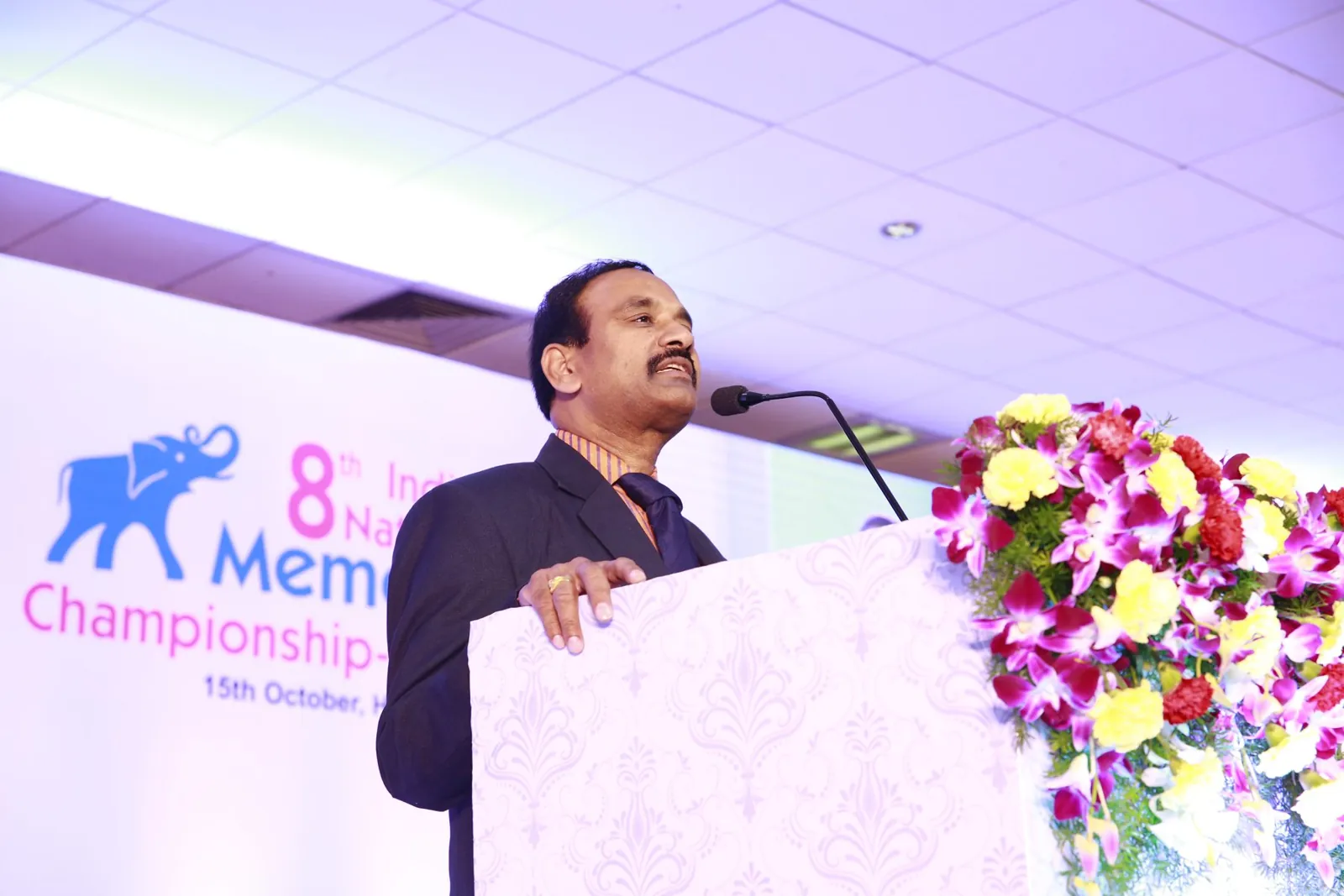
In Memory Power there is a chapter I am proud of. It is called Jayasimha's Memory Power System. It is the method I developed myself, and all my Guinness World Records in memory are based on it. It is also the method I use for every memory demonstration.
It will take you some time to master. But once you do, remembering text, numbers, speeches and any kind of data becomes easy.
The idea in one line
You make a list of a hundred people you know, in a fixed order. Each person is a number. Then, to remember a list of objects, you tie the first object to the first person, the second to the second, and so on.
Why people? Because people carry emotion. You do not forget your mother's face. You do not forget your old class teacher. When an object attaches to someone you feel something for, the picture stays.
Step one: make the hundred
The book gives you categories, in this order. Family. Relatives. Friends. Colleagues. Teachers. Role models. Names of gods and goddesses. Sports persons. Film actors. Politicians. Award winners, scientists and authors. Fictitious characters. You may also add your own categories.
There are conditions, and they matter.
- Create the categories in order and do not mix them.
- Choose people with whom you have some emotion.
- Do not repeat a name.
- Keep the categories in a generation order, so it is easy to recall.
- If a category has only three people, add one more. If it has more than four, take only the first four.
- You can give odd numbers to women and even numbers to men, or the other way round. This makes the job much easier.
- Aim for a list up to one hundred.
The book begins like this. One is mother. Two is father. Three is sister or yourself. Four is yourself or brother. Five is grandmother. Six is grandfather. Seven and eight are an aunt and an uncle. See how it works? Odd numbers are women, even numbers are men. The list then moves to the next aunts and uncles, cousins, childhood friends and classmates.
Step two: learn the list
This is the first task. Learn the hundred names and numbers in order. You should be so perfect that if I say a number, you can say the person immediately. And if I say a name, you can say the number.
Do not rush. Take a few days. Say them in order, then backwards. Make it a game with your children or cousins.
Step three: hang the objects
Now, when you want to remember objects, tie them to the people. The book gives a list of twenty. Telephone with the first person. Pepsi with the second. Popcorn with the third. Train with the fourth. Pen with the fifth.
See it clearly. Your mother talking on a giant telephone. Your father drinking a huge Pepsi. Your sister eating popcorn from a bucket as big as a drum. Make it funny, make it big, and put some feeling in it.
Then you can recall in forward order, in backward order, or by number. Ask me for object number eleven and I walk to person eleven. This is by far the most powerful memory method I have found.
Why it is so strong
There are three reasons. The people are already in your heart, so you need no effort to hold them. The order is fixed, so you always know what comes next. And because the list is permanent, you can reuse the same hundred people for a new set of objects every day. The old pictures fade by themselves, and the people stay.
A word of honesty
The book only fully lists the first twenty names, and leaves the rest as blanks for you to fill. That is deliberate. These must be your people, with your feelings. Mine would not work for you.
Start with just the family list of fifteen. Learn that well. Then use it for tomorrow's shopping list or the five points of your next talk. Add more categories as you grow.
This is one idea from my book Memory Power.