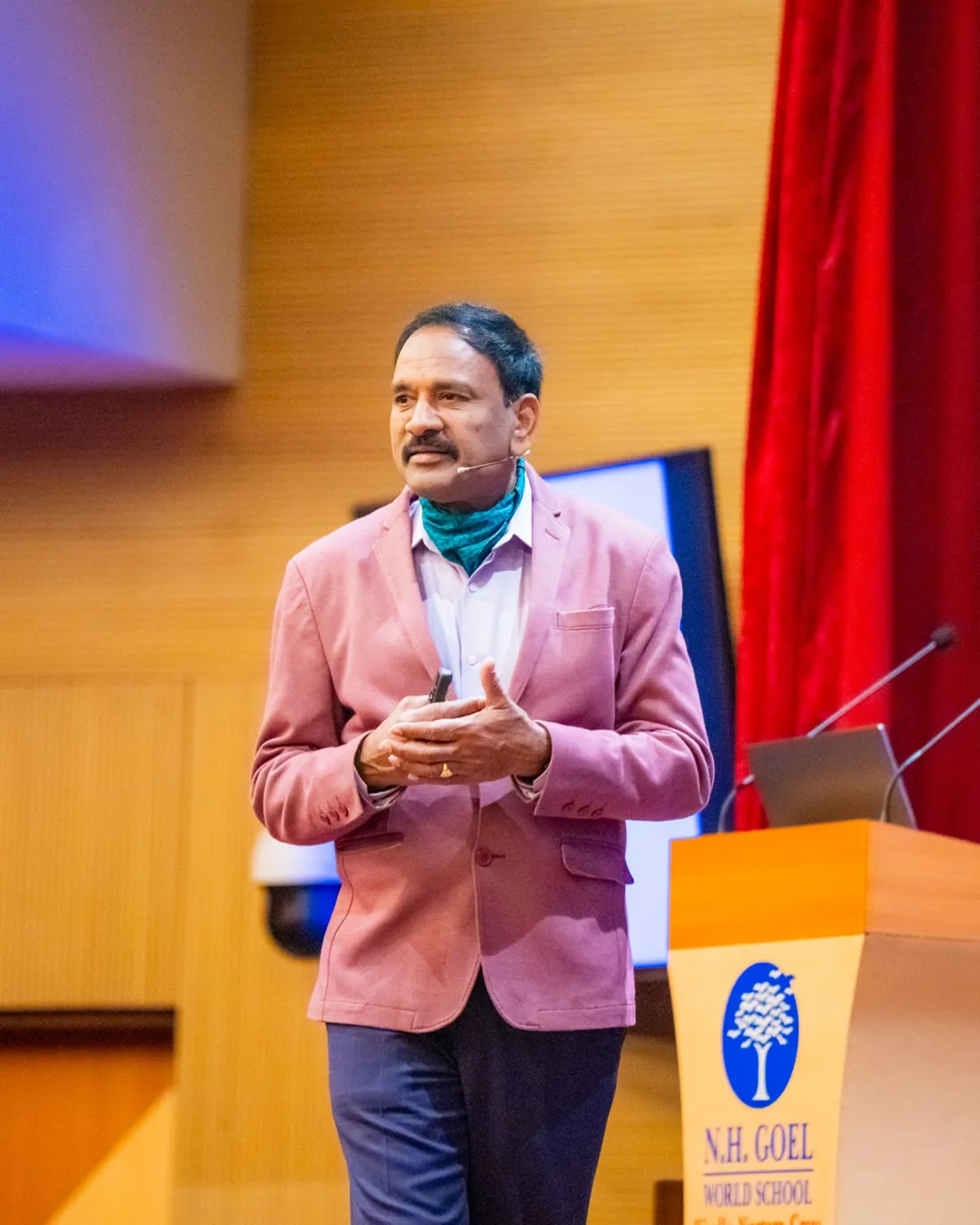

I have trained students in engineering and medical colleges all over India. Almost everywhere I see the same thing. These young people are technically very sound. Then they sit in front of an interviewer, and they fail.
I have a name for this problem. I call it the "I know that I know, but I don't know how to tell you that I know" syndrome.
The gap is not in the subject
I have spoken to HR managers of many companies. They told me the same thing. Campus recruitment continues, but more and more companies have to give new joiners long hours of on-the-job training. The gap is not in subject knowledge. In my book I note that around 90 per cent of students pass their written examinations. The gap is in soft skills. It is in the way the student expresses or presents himself or herself to the interviewer.
Many students believe that the ones who do well in interviews are just lucky. They are not. Their success is the result of thorough personal preparation. Ask any HR manager and he will tell you that the best jobs go to the best-prepared candidates. So remember this line. Proper preparation prevents poor performance.
Why your resume is not enough
Think about your classmates. Many of them have the same degree, the same marks and almost the same resume. On paper, you look alike. The interview is where the interviewer finds out what is different about you.
The interviewer is also looking for one more thing. He wants a person who has the company's interest in mind, not only his own. Everybody who is called has the required skills. The ones who get selected are usually the ones who can tell the interviewer how the company will benefit from those skills.
Let me say that again, because it is the most important point in this post. Do not only say what you have. Say what the company gets from it.
What goes wrong in the room
In my book I have listed fifteen reasons why candidates get rejected. Look at some of them.
- Inability to express himself or herself clearly.
- Not prepared for the interview, no research done on the employer.
- Asks no questions, or very poor questions, about the job or the company.
- Makes excuses and gives evasive replies.
- Fails to look the interviewer in the eye.
Not one of these is about marks. Every one of them can be fixed with practice. That is the good news.
One exercise to do today
Take a piece of paper. Write down the three things you know best. It could be a subject, a project from your final year, or an internship you did in the summer.
Now, for each one, write one line that begins with "This helped because...". For example, a student who built a small billing program for his uncle's shop can say that it saved his uncle an hour of work every evening. That one line turns knowledge into proof.
Next, find a friend. Do not choose a friend who will only say "Super, da." Choose one who will tell you the truth. Sit across from him and explain your three points aloud, two minutes each. Ask him two questions. Did you understand me? Was there a moment when you lost interest?
In the book I suggest mock interviews with reliable friends. I also suggest something more. If you are nervous by nature, go in for debate sessions or a public speaking course. Training in front of strangers is a big advantage, because strangers do not go easy on you. A club like Toastmasters is a good place for this.
Do it more than once
The first attempt will feel awkward. Your friend will look bored at some point. Your sentences will wander. Good. This is exactly what you want to find out in your own room and not in front of an HR panel.
Repeat the exercise tomorrow with a different friend. By the third time, you will notice that you are using fewer words and giving clearer examples. That is the skill the company is looking for.
I tell all my students, you have it in you. Marks got you the call. Preparation will get you the job.
This is one chapter's worth of thinking from my book Get That Dream Job.