Your mind remembers pictures. But a name is not a picture. Neither is the word Eternity. This is why we struggle with names, with Greek philosophers, with dates and with theory words in our textbooks.
The answer is simple. If there is no picture, make one. In Memory Power, I show three ways.
Way one: a sound alike picture
Look for a word that sounds like the name, and gives you something you can see. Here are the ones the book uses.
- Sarah becomes saree.
- Judy becomes judo.
- Heidi becomes hide.
- Harold becomes hair and old.
- Tommy becomes Tom and Jerry.
- Jacob becomes jackal.
- William becomes wills.
- Daniel becomes Don.
Then when you meet a Sarah, you quietly see a saree on her. When you need to remember her name later, the saree appears, and the name follows.
The 44 Presidents trick
To prove how far this goes, I give a list of forty four odd pictures. A washing machine. A dam. A chef cooking the sun. Medicine. A man in a row boat. Each one sounds like a US president. Washing machine is Washington. Medicine is Madison. Chef sun is Jefferson. A gate with water rushing through it is Nixon, because of Watergate.
You may not care about American presidents. That is fine. The point is the method. You can do the same with kings, prime ministers, scientists or the rivers of India. Find a sound alike, then put it on a file, as we have done with the body or house files.
Use your own language
This is important. The book says clearly that if an image is not comfortable or familiar, change it for something from your own language, your own subject, or something personal.
So the book itself uses Indian sound alikes. Indiana is India. Kansas is Kansa, the uncle of Lord Krishna. Missouri is Mysore. Michigan is Michael Jackson. Pennsylvania is Pen and Veena. Wyoming is I am wrong. They are silly. That is exactly why they work.
Way two: symbols for abstract words
Take words such as cold, warm, illness, eternity, separation, autumn, winter and summer. They have no picture. So choose a symbol.
- Cold is ice.
- Warm is hot water.
- Illness is a thermometer.
- Eternity is the Egyptian pyramids.
- Separation is a train.
- Autumn is leaves.
- Winter is snow.
The same works for school subjects. Mathematics is a graph. History is Napoleon. Drawing is paint. Music is a flute. Geometry is a compass. English is William Shakespeare.
The book gives a rule that I like very much. Take the image that first appears in your mind. If you find it difficult to choose an image for a word, it means you do not understand the word well enough. Its meaning is not clear to you. So the exercise also tells you where you must study more.
When you recall, pause for a second. Then write the original word, not the picture.
Way three: consonance, for words that mean nothing
Some words, such as foreign terms or strange spellings, have no meaning for you. For these, use a word that sounds close but gives a picture. In the book, factor becomes tractor, and Kub becomes Cuba.
Here you need care, because you must also recall the spelling. If you use pizza to remember a word starting with R, say the word in your head with the R sound while seeing the pizza. When you finish, test yourself, and memorise again any that are missing.
A few cautions
Keep the picture simple. If you spend ten minutes finding the perfect image for one name, you have gone too far. Take the first one that comes to you, even if it is silly. Also, when you see the picture later, you must remember to go back to the real name. Say the name aloud once, so the word and the picture sit side by side.
Try it today
Pick ten names from your class list or your family WhatsApp group. Next to each, write a picture. Spend one minute on it. Tomorrow, look at the picture first and see if the name comes. It almost always does.
Names are the one thing people are most pleased to hear you remember. Use that.
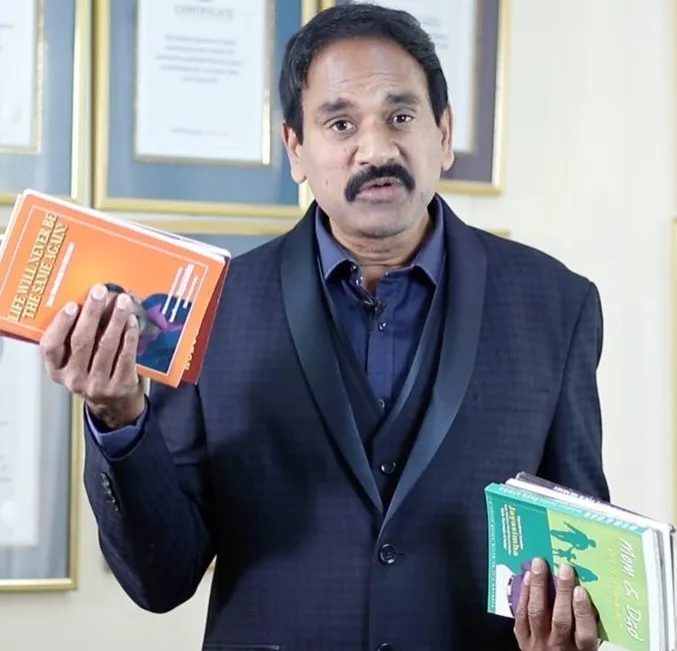
This is one idea from my book Memory Power.